
A Calmer Mind
When you learn to return to the present moment, your mind settles. You feel it in the moment. One minute of return. One minute of calm. That is the benefit. Real and available to you now.
Learn to return to the present moment in 6 breaths. The benefits of a calmer mind will follow.
When you learn to return to the present moment, your mind settles. You feel it in the moment. One minute of return. One minute of calm. That is the benefit. Real and available to you now.
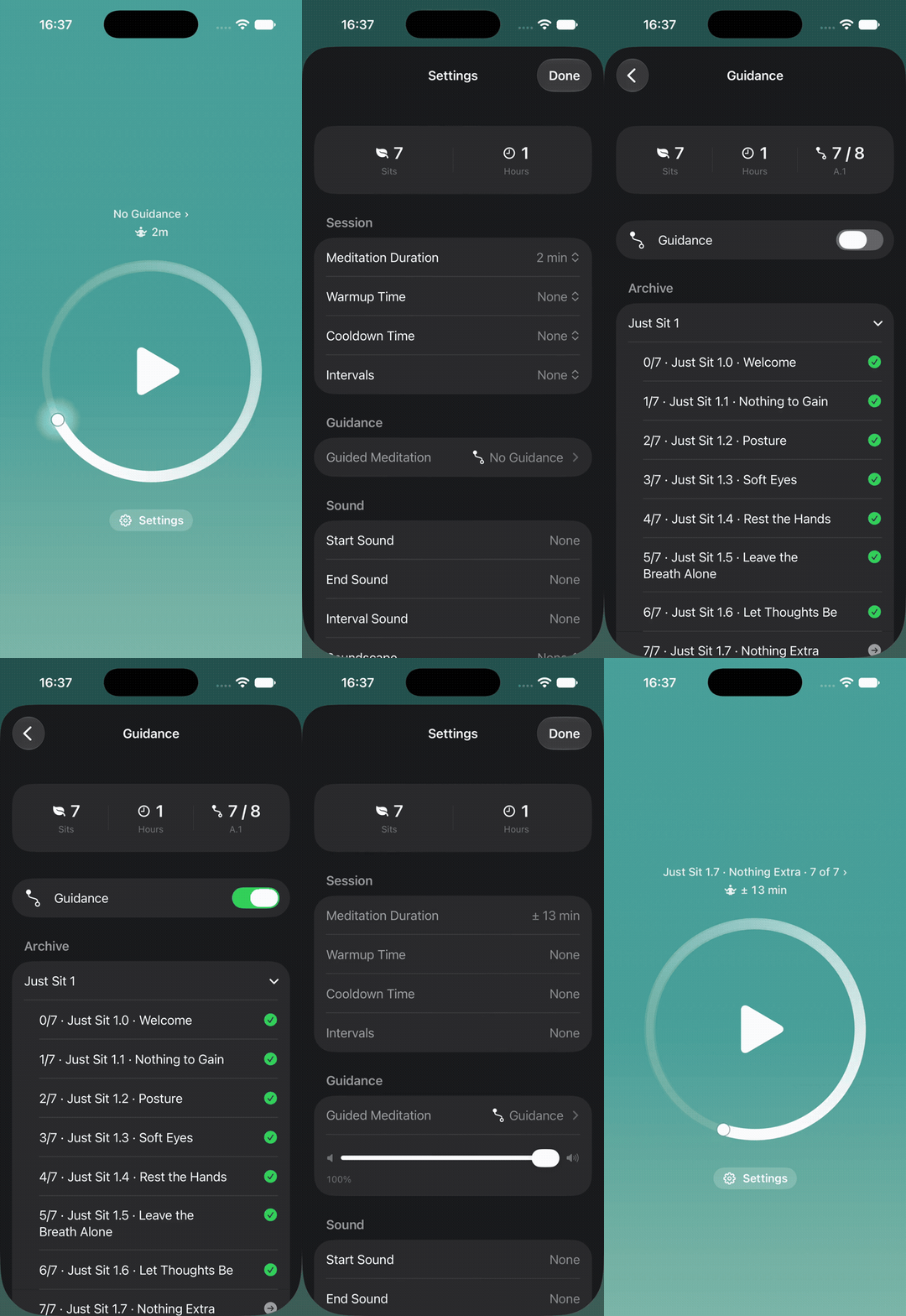
Zen : Your Way teaches you meditation bit by bit. Clear instructions. Then silence. One idea at a time. Day by day you build your practice. On the cushion and in daily life.
As you keep showing up, the practice deepens. You learn how to sit. Week by week, the silence grows. You are building something that lasts. A practice that becomes your own.
A few seconds of instruction. One Present Return, then we take some time to sit with the breath and return to the present moment.
Meditation does not have to take 30 minutes. It only takes one to get started, and five when you are ready for a first baby-step into sitting. That is why I teach this length: one Present Return to calm the mind, then time with the breath as your anchor while you practice coming back.
Five minutes helps when thirty minutes still feels impossible. More at meditation for beginners. Prefer the compact version first? Start with 1 minute. Want the return plus how to use it in daily life, without the longer sit yet? Try 3 minutes.
I teach two kinds of practice: off the cushion, small returns in ordinary life, and on the cushion, the longer sits where you learn to stay. Present Return is the first. Five minutes keeps that same single round, then invites you to sit with the breath.
Returning to the present moment sits at the core of most meditation traditions. You do not need a quiet room or twenty free minutes to taste that. Use it at home, before a call, when you do not know where to start.
Here is how I teach it. You are going to count six breaths. Let the first one be a deeper one to mark the start. Then for the next breaths, just observe them. Where do you feel them? What are they like? Deep, shallow, slow, fast?
For the counting, you use your fingers. On each breath in, let your thumb touch another finger. Start with the index. Move to the middle, ring, pinky, and back. When you return to the index, you are done. That is one round. Your fingers keep the count, so you are not counting in the head.
In this session the counting on the breath is how you return to the present. The present is the first thing you learn. Aim for about six or seven breaths a minute. About a minute for the round. Listen once with the audio on the 1-minute page. Then take it with you without headphones.
In the five-minute session we do that one Present Return, not a second loop. Then the session turns toward the sit.
After Present Return, we practice returning to the breath together. Let the breath be ordinary, long or short as it comes. No need to drive it. The breath is the anchor. When anything pulls you away, come back to the next breath.
That is the whole middle of the session: silence, then a simple cue to return, then silence again, until the five minutes are complete. No second finger count. No new technique. Just the anchor, and the habit of coming back.
Present Return first, then silence with the breath. That is a first baby-step into sitting. A chair is enough.
Present Return brings you back in a minute. Five minutes lets you practice staying with the breath after you have come back.
If you want to build a daily practice, the seven-day course walks you through one clear idea a day, then a sit, so the habit grows without overwhelming you.
Meditation can be hard. You will skip days sometimes, and that is fine. The important thing is to sit again. I ease into it slowly. When you are ready to stay longer, try the 10-minute sit or long meditation.